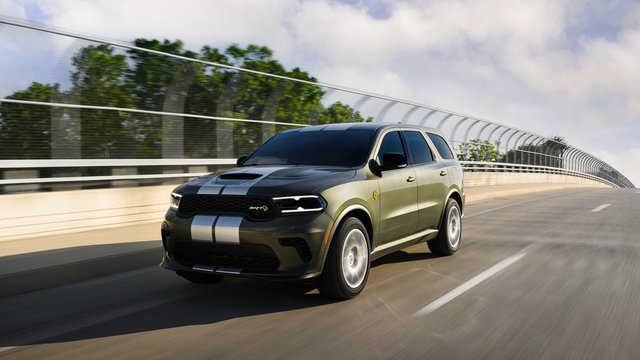
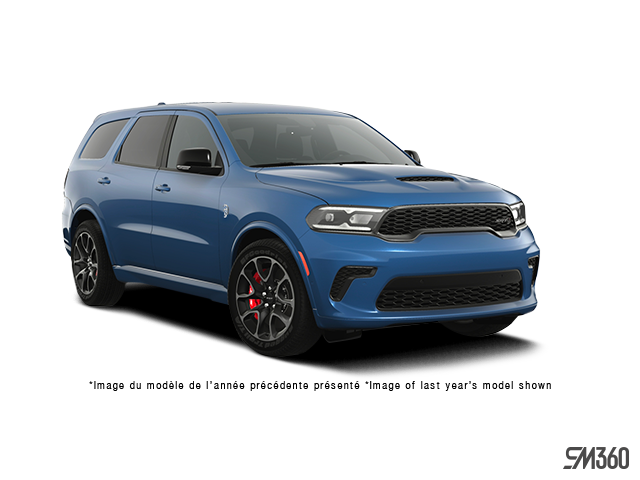
The 2027 Dodge Durango SRT Hellcat makes a straightforward case: 710 horsepower in a three-row SUV that also tows 8,700 lbs (3,946 kg). For New Brunswick drivers weighing performance against practicality, that combination is worth understanding in detail before the vehicle arrives at dealerships.
This article breaks down the supercharged 6.2L HEMI Hellcat V-8, how the system works under the hood, and what those numbers translate to on the road.
The Engine at the Heart of the SRT Hellcat
The Durango SRT Hellcat runs a supercharged 6.2L HEMI V-8: a 90-degree, liquid-cooled unit built on a deep-skirt cast-iron block with cross-bolted main bearing caps and aluminum alloy heads with hemispherical combustion chambers. The valvetrain uses pushrod-operated overhead valves with sodium-filled exhaust valves and hollow-stem intake valves, totalling 16 valves. The engine redlines at 6,100 rpm, which is where it produces its rated 710 hp. Peak torque of 645 lb-ft arrives at 4,800 rpm.
The compression ratio is 9.5:1, and premium 91 octane fuel is required, not just recommended. The exhaust exits through a dual system with a crossover X-pipe and 4-inch round nickel-chrome tips.
How the Supercharger and Intercooler System Work
Forced induction is the key to reaching 710 hp from a 6.2L displacement. The supercharger compresses intake air and forces more of it into the combustion chambers than a naturally aspirated engine can draw on its own. More air means more fuel burned per cycle, and more output per revolution.
Heat is the enemy of that process. Compressed air gets hot, and hot air is less dense, which erodes the power gain. The Hellcat addresses this with a separate low-temperature cooling circuit using dual water-to-air intercoolers and a high-flow variable-speed electric water pump. The intercoolers cool the compressed charge before it enters the engine, keeping intake temperatures in check during sustained hard driving.
Key powertrain specs at a glance:
- Displacement: 6.2L supercharged V-8
- Output: 710 hp / 645 lb-ft
- Fuel requirement: Premium 91 octane (required)
- Transmission: TorqueFlite 8HP95 eight-speed automatic with paddle shifters
- Towing capacity: 8,700 lbs (3,946 kg)
- Fuel economy (city/hwy/combined): 20.5 / 13.8 / 17.4 L/100km
Power routes through the TorqueFlite 8HP95 eight-speed automatic, with paddle shifters on the flat-bottom steering wheel. The MP3010 transfer case sends torque to all four wheels, with splits that shift depending on the selected drive mode: Auto runs 40/60 front-to-rear, Sport moves to 35/65, Track drops to 30/70 for a more rear-biased character, and Snow and Tow both go 50/50 for maximum stability. A Custom mode is also available.
Stopping power comes from a high-performance red Brembo system: 15.7-inch two-piece vented and slotted front rotors with six-piston calipers, and 13.8-inch vented rear rotors with four-piston calipers. Adaptive damping suspension with Bilstein shocks manages body control, and ground clearance sits at 204 mm.
What 710 Horsepower Means on the Road
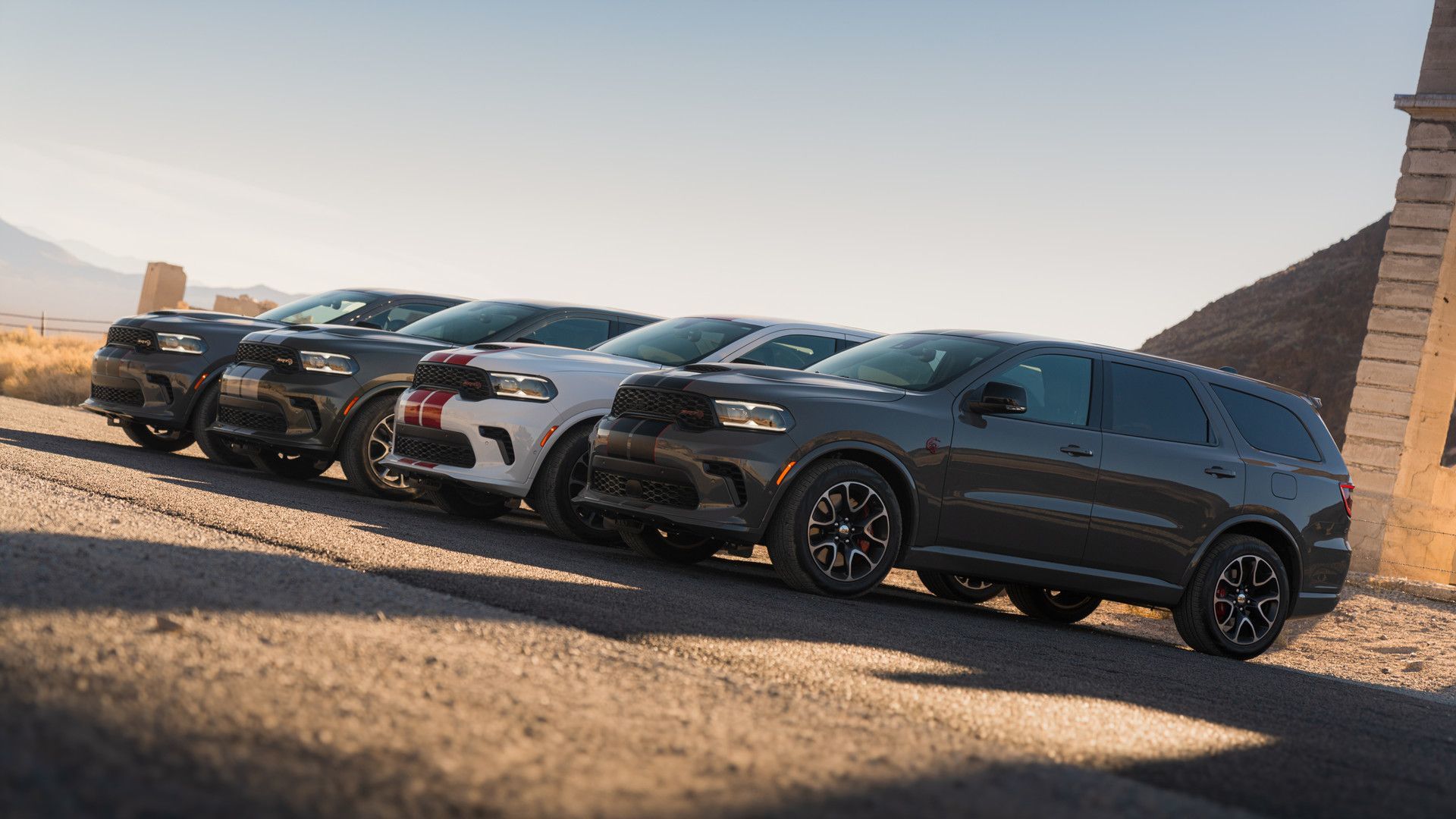
The 0-60 mph time of 3.5 seconds and an NHRA-certified 11.5-second quarter mile are the headline performance numbers, but two others shape everyday ownership more directly.
The first is towing. At 8,700 lbs (3,946 kg), the SRT Hellcat matches the R/T 392 Plus at the top of the Durango towing chart. The supercharged powertrain does not cost you capability at the hitch. Payload is 721 kg, also the highest figure in the Durango lineup. That combination means a loaded trailer, a boat, or a pair of off-road machines all fit within the rating.
The second is fuel. The SRT Hellcat’s combined rating of 17.4 L/100km reflects what 710 hp costs at the pump, and the 93.1L tank helps manage range between stops. Buyers going in with clear expectations will budget for premium fuel on every fill.
Launch Control is standard, letting the driver load the drivetrain before a standing-start run for consistent, repeatable acceleration. On a track day, that matters. On a daily commute, it is simply there when you want it.
Who Gets the Most From This Powertrain
The SRT Hellcat suits a specific buyer: someone who wants track-capable performance but also needs to tow seriously and carry passengers on the same vehicle.
The standard interior is a five-passenger configuration with Nappa leather and Alcantara seating. For buyers who need more seats, the SRT Hellcat Jailbreak package adds six- and seven-passenger configurations, along with more than 14 million customization combinations: seven wheel options, seven exterior colour choices, six badging finishes, five seating colour options, and four seat belt and brake caliper colour choices.
All Jailbreak models also add standard carbon-fibre interior accents and a Jailbreak instrument panel badge. A Harman Kardon 19-speaker system with subwoofer and 825-watt amplifier is available as well.
If the R/T 392 Plus is on your shortlist, the comparison is direct. The 6.4L HEMI in the R/T 392 Plus produces 475 hp and 470 lb-ft, reaches 60 mph in 4.4 seconds, and posts a 12.9-second quarter mile. The jump to the SRT Hellcat adds 235 hp, cuts nearly a second from the 0-60 run, and trades the R/T’s standard seven-passenger seating for the Hellcat’s five-passenger default.
That is the real decision between the two top trims: more power and a more driver-focused cabin versus seven seats from the factory.
The 2027 Durango SRT Hellcat Is Coming to New Brunswick
The 2027 Dodge Durango SRT Hellcat leads the Durango lineup with a supercharged 6.2L HEMI V-8, 710 hp, an 8,700 lbs (3,946 kg) tow rating, and a Jailbreak personalization program that covers seating, wheels, colour, and interior detail.
Visit Summit Dodge in Fredericton to get the full spec breakdown, explore Jailbreak configurations, and get on the list when the 2027 Durango SRT Hellcat arrives at New Brunswick dealerships.